
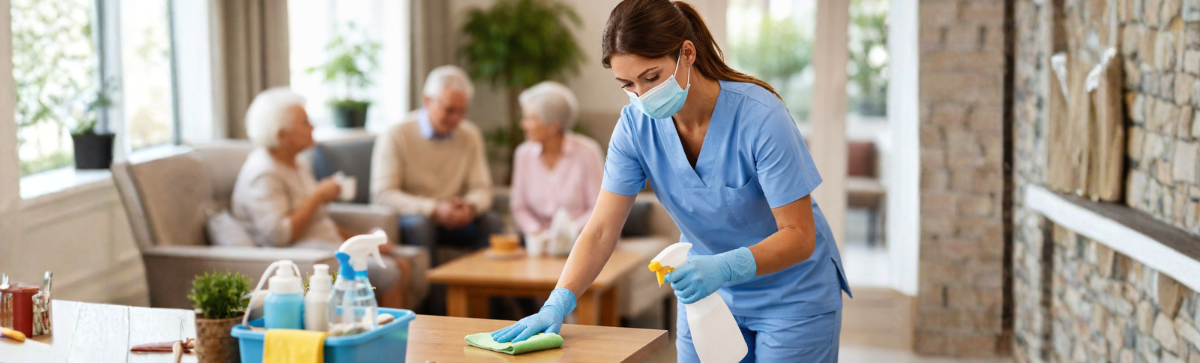
Ever wonder if the products we rely on every day could be creating unintended challenges? QAC disinfectants in senior care are widely used. However, emerging research is raising important questions about their long-term effects on residents and staff.
Quaternary ammonium compounds, or QACs, are chemicals commonly used in personal care and disinfecting products. However, growing evidence suggests that some QACs can exert a range of toxic effects. Environmental exposures are especially concerning for vulnerable populations, such as children and older adults. These groups are more sensitive to adverse effects. A recent study published in Environmental Science & Technology examining QAC exposure levels and associated risks shows how these chemicals can accumulate indoors and contribute to potential health concerns.
Researchers have limited information on how QAC exposure affects older adults, especially those living in senior care communities. However, providers use these compounds often, which raises concern. Their link to adverse respiratory effects is especially important for older adults. They tend to contract respiratory illnesses more often than younger adults. Increased frailty can also lead to more complicated recoveries. Reporting on this research about disinfectant overuse in assisted living and its potential health risks noted that exposure to several QACs was significantly higher in senior care centers than in residential homes.
So, what are providers to do? Start by talking to your local experts about the risks and benefits of the chemicals you use. It is also a good idea to review the OSHA website for updates on chemical hazards. If you are unsure and alternatives without QACs are available, consider adjusting your cleaning protocols.
Remember, if you change your disinfecting chemicals, the manufacturer’s recommendations may differ. Be sure staff responsible for cleaning and disinfecting in your community understand all new chemicals and how to use them properly. Taking a thoughtful approach to QAC disinfectants in senior care can support both infection control efforts and the overall well-being of residents.
Stay well and stay informed!