
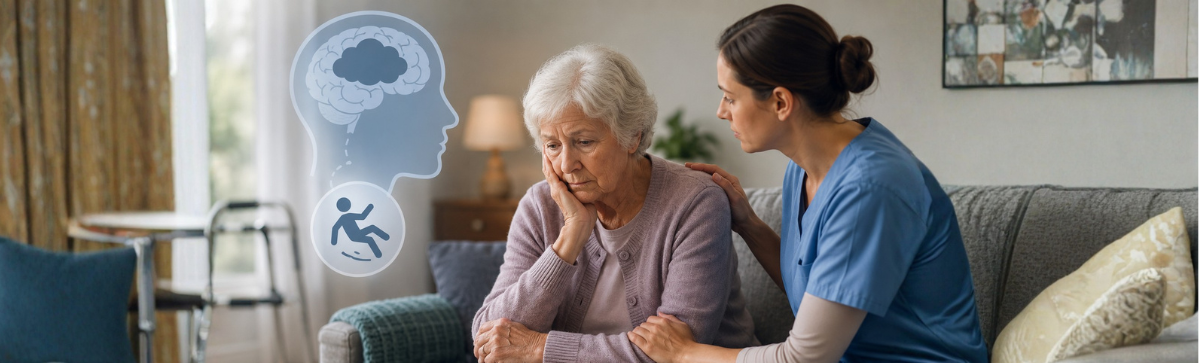
Falls remain one of the most significant risks facing older adults, and new research suggests that depression and fall risk may be more closely connected than many providers realize. According to a recent study highlighted by McKnight’s Long-Term Care News, older adults who reported depressive symptoms after discharge from the emergency department following a fall experienced more recurrent falls than those without depressive symptoms.
This finding reinforces what clinicians have known for years: depression increases fall risk among older adults. Falls can lead to serious injuries, functional decline, hospitalization, and death. Unfortunately, healthcare providers frequently miss depressive symptoms in older adults. Since the emergency department often serves as the first point of healthcare contact after a fall, providers may have an opportunity to identify this high-risk group and strengthen prevention efforts.
The study, published in BMC Geriatrics, found that older adults with depression commonly experience gait impairment, which may increase their likelihood of falling. Researchers also noted that gait speed may help explain the relationship between depressive symptoms and recurrent falls.
Senior living communities frequently transfer residents to emergency departments after a fall. That environment can challenge residents living with dementia, residents experiencing delirium, and residents coping with pain from an injury. Under those circumstances, clinicians may struggle to identify the underlying factors that contributed to the fall. Communities can often gain more value by evaluating residents proactively before an incident occurs.
Think about your current process. Do you routinely evaluate residents for signs and symptoms of depression? If so, does your community address those symptoms effectively? Consider adding depression and fall risk to your next QAPI committee agenda. Set the stage, establish measurable goals, and challenge the group to think outside the box. Maybe, just maybe, you will avoid that next ER transfer.
Stay well and stay informed!