
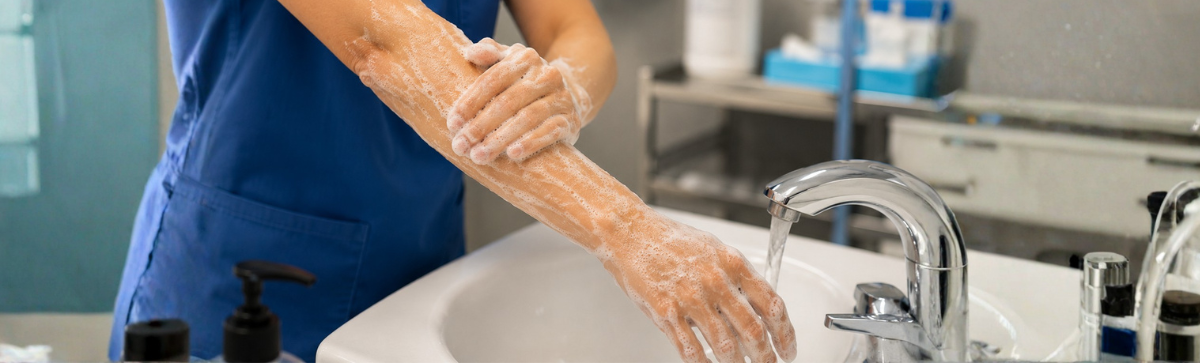
Did you know that approximately 50% to 65% of nursing home residents harbor a multidrug-resistant organism (MDRO)? This is one reason why hand hygiene practices remain so important. High-contact care activities such as bathing, dressing, transferring, and toileting can readily transfer MDROs to staff gowns and gloves.
Although enhanced barrier precautions (EBP) require staff to wear gowns and gloves while performing these activities with high-risk residents, studies have shown adherence is often poor. It is no wonder infection prevention continues to be a challenge.
We have emphasized hand hygiene for years, but have you ever considered staff members’ forearms? An interesting study published in Cambridge.org sampled the hands and forearms of 100 staff members from five nursing homes as they entered the breakroom or finished their shifts. Twenty percent tested positive for multidrug-resistant organisms, with contamination predominantly due to MRSA. You can learn more in the Cambridge University Press article.
These findings may be a good reason to revisit your hand hygiene practices and consider whether routine forearm washing should be included in your policy and procedure. While gloves provide protection for the hands, many staff members wear short-sleeved scrubs that leave their forearms exposed to pathogens. Bring this information to your QAPI committee and discuss it with your infection preventionist. It may be a simple change worth considering to help reduce the spread of difficult infections among staff, residents, and their families.
Stay well and stay informed!