Here we are in the throws of winter, snow, cold, wind, yuck! We’re all rushing through the seasons, just waiting for that first sign of spring, like a brave little crocus poking through the snow. But while we dream of warm weather, it’s also the perfect time to think about heat preparedness in senior living communities before summer’s heat waves hit.
A recent study published in JAMA Internal Medicine found that residents are at greater risk of dying from extreme heat in nursing homes without air conditioning compared to those with AC. That’s a sobering finding, especially when you consider that almost half of all nursing homes in the U.S. were certified before October 1, 1990, the cutoff date when maintaining indoor temperatures between 71° and 81° became required. According to data from the Centers for Medicare & Medicaid Services, that’s 6,898 out of 14,782 active communities.
There is no federal requirement for those older communities to install air conditioning, and there’s no publicly available data to show how many currently have it. In contrast, Ontario, Canada, took decisive action after similar concerns. As of July 2020, 55.1% of Ontario nursing homes did not have AC. But in response, the province mandated air conditioning in all nursing homes to help prevent heat-related deaths.
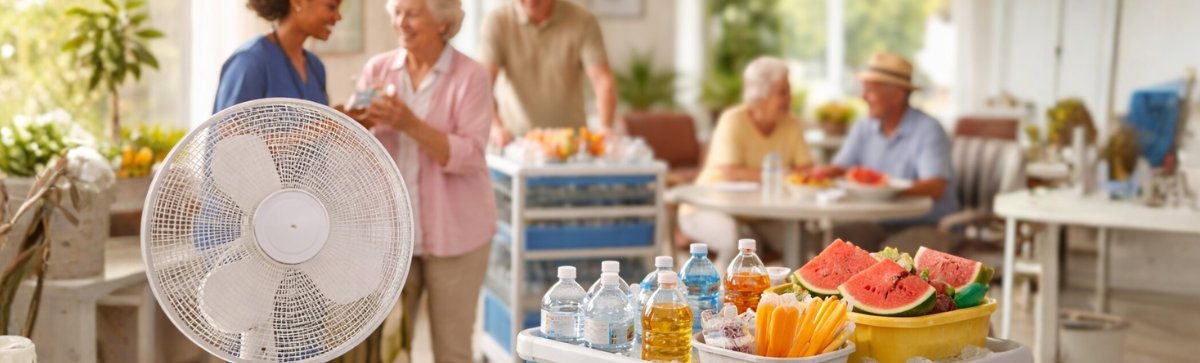
Should the U.S. do the same? The debate continues. Meanwhile, if your community doesn’t have full AC coverage, now is the time, while the weather is still miserable outside, to prep for hotter days ahead. Review your extreme heat response protocols. Make sure hydration carts and water stations are cleaned, stocked, and easy to deploy. It might be too soon to buy watermelon, popsicles, or Italian ice, but it’s not too soon to prepare a list of needed supplies and get plans in place.
According to McKnight’s Long-Term Care News, experts are urging senior care providers to be proactive. Preparation is our best defense. If we prevent even one heat-related illness or death, we’ve done what matters most.
With intentional planning, heat preparedness in senior living communities becomes part of the culture, not just a seasonal scramble.
Stay well and stay informed!