
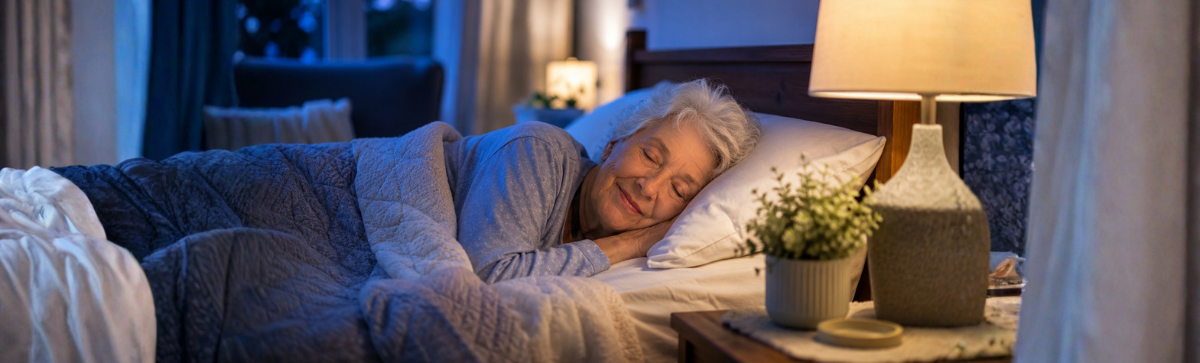
Sleep Hygiene in Senior Living may not be a topic that gets much attention, but it should. The damaging effects of not getting enough sleep can creep up on residents and staff alike. Over time, poor sleep can take a serious toll on health, mood, and overall well-being. Most of us know what it feels like after a night of little or no sleep. We feel drowsy, sluggish, irritable, and low on energy. Our minds become groggy, concentration suffers, and mistakes become more common. It can feel like an endless cycle of trying to stay awake.
While sleep needs vary from person to person, most adults need seven to nine hours of sleep each night. If residents are not regularly getting that amount, they may be experiencing sleep deprivation. According to HelpGuide’s overview of sleep deprivation, chronic sleep loss can affect memory, concentration, mood, immune function, and overall health. It is also important to remember that sleep is not just about the number of hours spent in bed. Quality matters just as much. Noise, bright lights, physical discomfort, and frequent interruptions can all affect sleep quality. These disruptions may prevent residents from spending enough time in restorative deep sleep and REM sleep.
Take a moment to think about your community. When was the last time you visited during the afternoon shift or overnight hours? Do residents complain about noise at night? Are bright lights being turned on during nighttime care? Are residents frequently drowsy during the day or falling asleep during activities? These observations may point to a larger issue. Sleep Hygiene in Senior Living requires looking beyond schedules and routines. It means understanding what residents experience after the lights go out.
Improving sleep quality often starts with simple steps. Visit the community during off-shifts. Identify sources of noise and disruption. Educate staff about the importance of nighttime routines. Talk with residents about habits that help them sleep. Some residents may prefer a dark room. Others may find comfort in soft lighting, relaxing music, or a familiar bedtime routine. The 2026 Sleep Tip Sheet from the Mather Institute offers additional suggestions. These practical ideas can help support healthy sleep habits and improve quality of life.
The bottom line is simple: quality sleep is not a luxury. It is an essential part of health and wellness. By paying closer attention to nighttime routines and environmental factors, communities can help residents rest more comfortably. They can also help residents wake up ready to engage in the day ahead.
Stay well and stay informed!